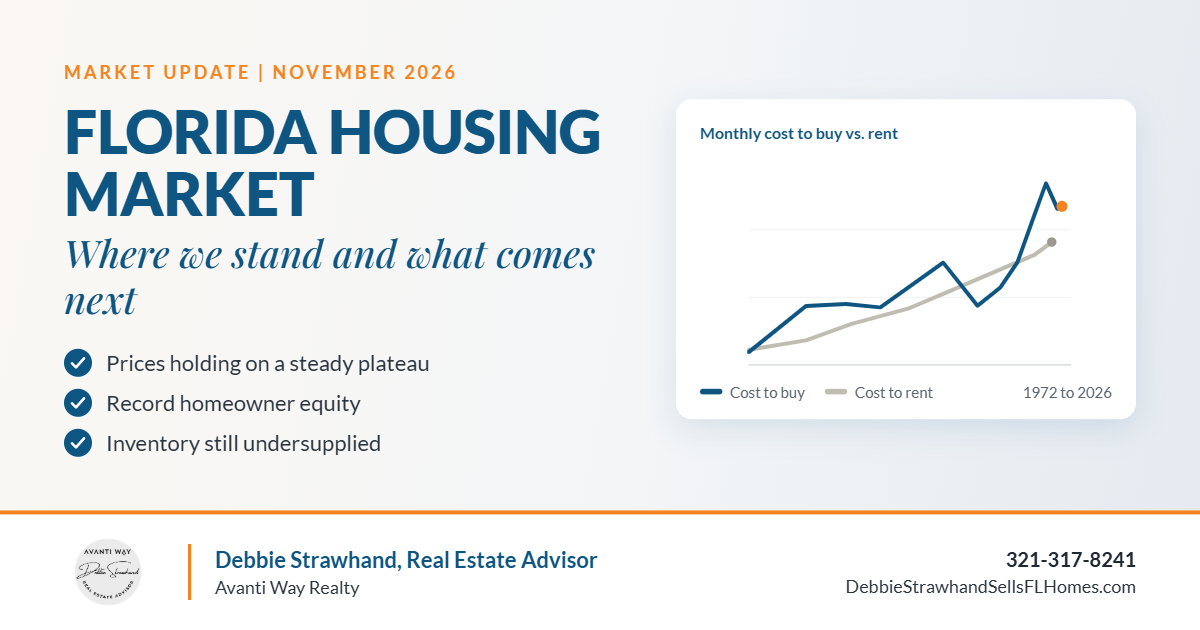
Where We Stand and What Comes Next in the Florida Housing Market
November 2026 | Debbie Strawhand, Avanti Way Realty
If you have been watching the headlines and wondering what is really happening with home prices, interest rates, and sales here in Florida, you are not alone. The short answer: the market is not crashing. It is recalibrating. Prices are holding steady, homeowners are sitting on record equity, and the biggest story for the next few years may be incomes slowly catching up to housing costs.
I recently sat in on a market briefing from our corporate office at Avanti Way Realty, and I want to share the highlights with you in plain language. Whether you are thinking about buying, selling, or simply keeping an eye on your home's value, here is where we stand and what we expect next.
Interest Rates and Buyer Demand
Mortgage rates have been moving higher again, pushed by inflation and global uncertainty, and that is cooling demand among buyers who rely on financing. The good news is that much of this pressure may be temporary. If global conflicts settle and oil supplies normalize, inflation could ease and open the door to lower rates down the road.
Until then, my advice is the same as always: focus on the right property at the right price, with a payment you can comfortably afford today. If rates come down later, refinancing may become an option. We also expect adjustable-rate mortgages (ARMs) to play a bigger role in the next cycle as buyers look for more flexibility. A trusted lender can walk you through whether that makes sense for you.
Here is the bigger picture. Even with population growth, home sales nationally remain well below historical norms. We are in one of the longest stretches of slow sales in the past 60 years. That matters beyond real estate, because each home sale generates an estimated $115,000 in economic activity, supporting everything from construction and home improvement to lending and local retail.
Home Prices: A Steady Plateau, Not a Correction
Nationally, home prices have held on a plateau since 2022, with only a slight dip from their peak. That is remarkable given higher rates and fewer sales. Limited inventory, strong homeowner equity, and ongoing demand have kept values on solid ground.
Florida has done even better, posting slight price increases while much of the country flattened. Now we are starting to see Florida level off too. Our corporate team expects prices to hold mostly steady, with the possibility of a slight dip, until buyers and sellers fully adjust to today's rates. Think of it as a healthy reset rather than a downturn.
Renting vs. Owning: The Gap Is Narrowing
Since 1972, rent has climbed at a fairly steady pace, while the monthly cost of owning has swung up and down with rates and prices. Big gaps opened in the early 1980s and again during the 2006 boom, and both times the two eventually moved closer together.
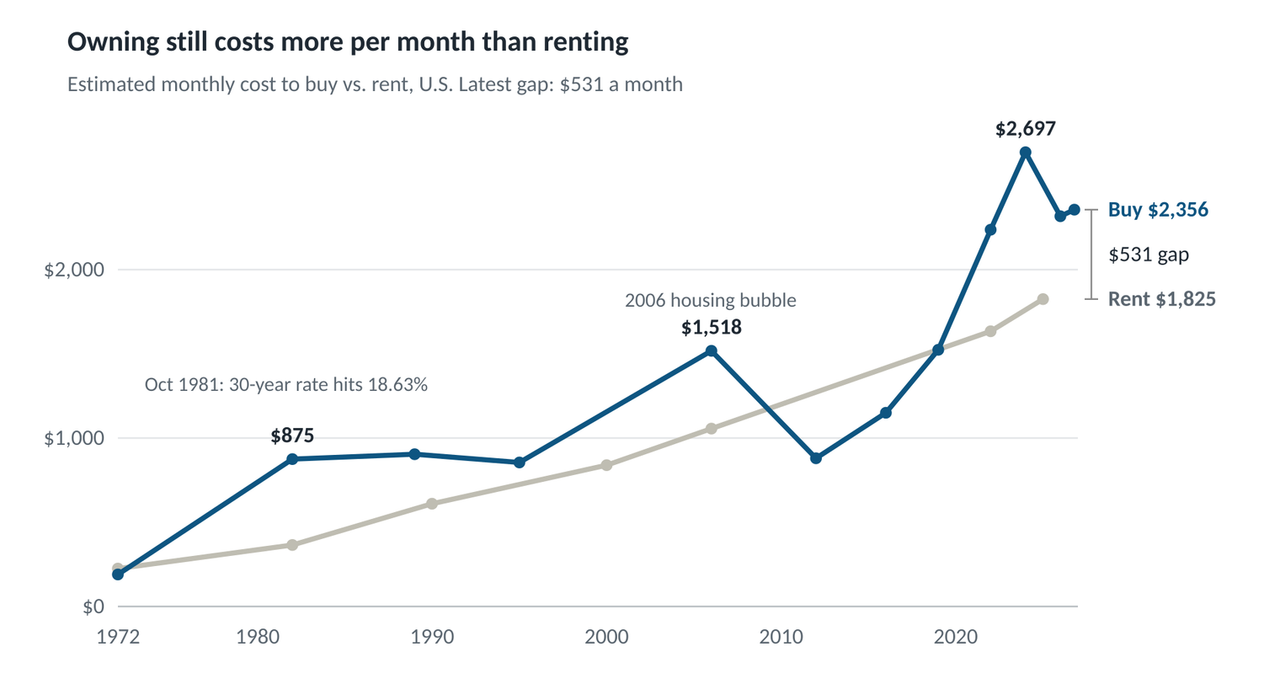
Source: Avanti Way Realty corporate market briefing, 2026. Values read from the briefing's rent vs. buy chart; years approximate. Latest cost to buy assumes a 7.5% rate.
After the pandemic, low rates fueled a surge in prices, then rising rates pushed the monthly cost of owning to its peak. It has since come down meaningfully, though it ticked back up recently with renewed rate volatility. For now, renting is still the more affordable monthly option for many households, a trend some call "Rent America." We believe the gradual narrowing of that gap could be one of the most important developments of the next cycle.
Record Home Equity: Why This Is Not 2008
Total U.S. home equity reached an all-time high of $35.81 trillion in early 2024, thanks to a decade of appreciation and much more careful lending since 2008. That cushion is one of the biggest reasons today's market is so different from the last downturn.
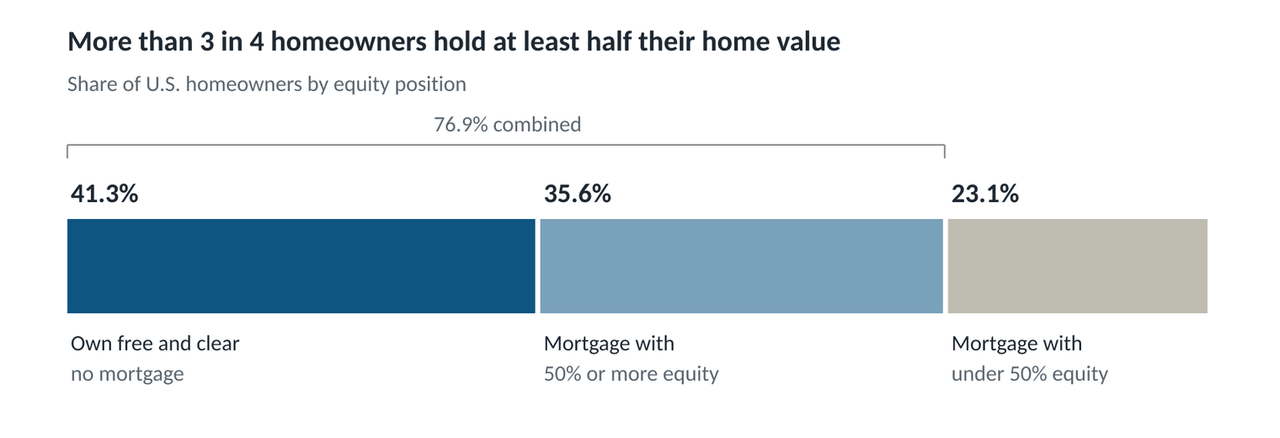
Source: Avanti Way Realty corporate market briefing, 2026. U.S. homeowners by equity position.
When most owners have paid off their homes or hold substantial equity, a slowdown or a modest price dip is far less likely to trigger forced sales or a wave of foreclosures. Before 2008, the opposite was true: high leverage and risky loans left many owners with little room to absorb a drop. Strong balance sheets make housing a source of stability for the broader economy today.
Inventory: Still Undersupplied
Nationally, inventory was steady from 2017 into early 2020, then dropped sharply as low rates and strong demand met limited new construction. Listings hit historic lows in 2022. Supply has recovered some since 2023, but the country is still short a significant number of homes compared with pre-pandemic norms.
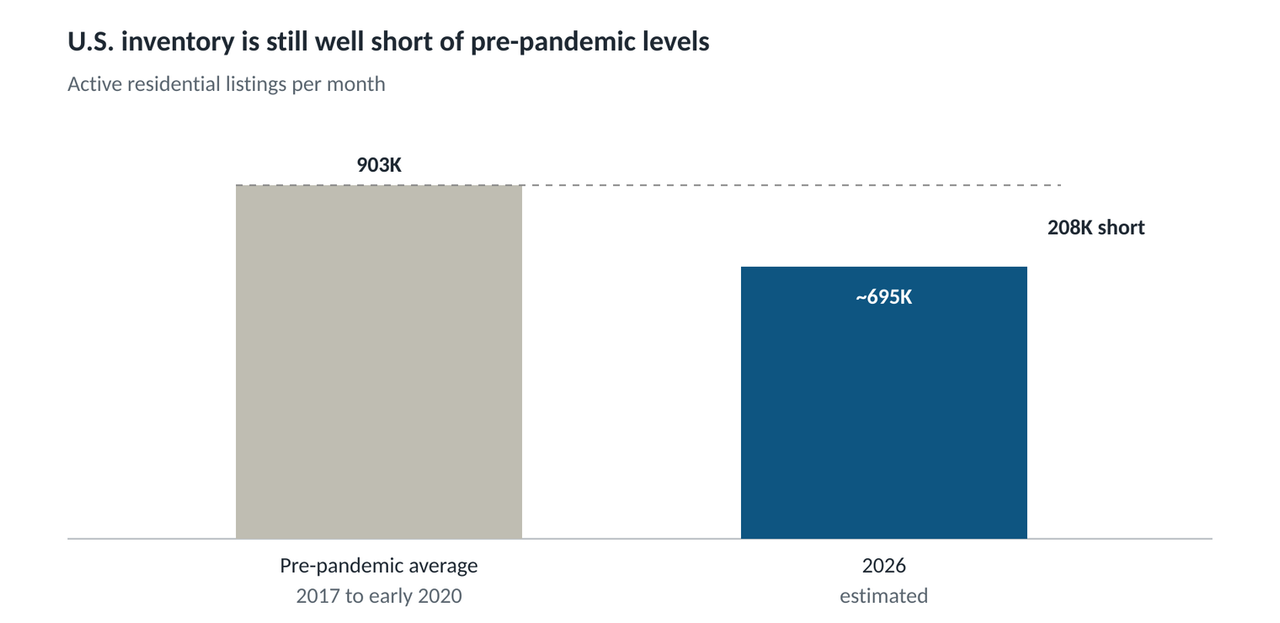
Source: Avanti Way Realty corporate market briefing, 2026. The 2026 level is estimated from the stated 208K shortfall.
That ongoing shortage is a big reason prices have held steady even with fewer sales. Florida's picture is a little different: active inventory has climbed back to pre-pandemic levels after record lows in 2021 and 2022. Even so, it remains in a range that has historically supported rising prices. Before the pandemic, Florida saw home values grow about 5% a year.
For Florida to see a meaningful price correction, meaning a drop of more than 10%, inventory would need to rise to levels last seen around 2010. We are still far from that point. More homes to choose from is welcome news for buyers, but the market remains supportive of values.
Why Builders Cannot Simply Close the Gap
New construction should be the answer to a housing shortage, but building has not kept up with population growth for years. After the 2008 crash, permits for new homes dropped well below their long-run average and stayed there for more than a decade, even as the country kept adding people.
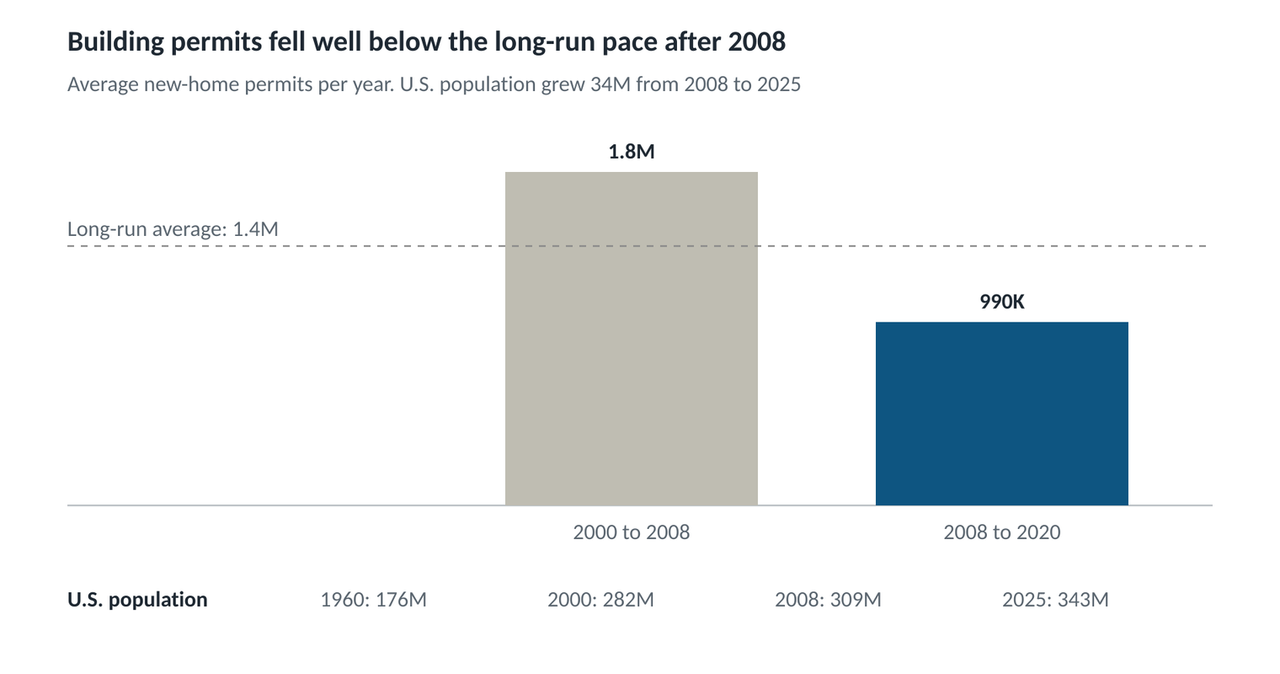
Source: Avanti Way Realty corporate market briefing, 2026, using Federal Reserve (FRED) data. Period averages and population as labeled on the briefing's chart.
Today, construction costs remain stubbornly high. Materials, labor, land, insurance, financing, and regulatory costs have all climbed, and they are not returning to pre-pandemic levels. In some price ranges, building a new home now costs more than buying a comparable existing one. When the numbers do not work, builders delay or cancel projects, which sets up future shortages.
At the same time, millions of owners are holding mortgages at historically low rates and are reluctant to sell and take on a higher payment. That "lock-in effect" keeps part of the resale market frozen. Fewer new homes plus fewer resales means that even if demand softens for a while, limited supply continues to support property values. Today's construction slowdown could become tomorrow's inventory shortage.
Rising Incomes: The Path Back to Affordability
Of everything we discussed, this may be the most important trend to watch. Past recoveries usually needed falling prices or falling rates to make homes affordable again. This time, the fix may come from paychecks catching up.
Wage growth has picked up since the pandemic, especially in Florida, and new jobs and businesses continue to move into the state. Incomes in many communities are still below what it takes to comfortably afford today's prices and payments. But if prices stay relatively flat while earnings keep climbing, affordability improves a little every year. Over time, that can unlock the pent-up demand that has been sitting on the sidelines.
One honest caveat: a higher median income does not mean every household is better off. Some of that increase reflects who is moving into and around the state, not just raises. Still, the direction is encouraging. As our corporate team put it, the real question is no longer whether prices will fall, but how quickly buying power can catch up.
The Heartbeat of the Market
Real estate has a natural rhythm. Looking at quarterly sales from 2013 through 2026, the second quarter (spring) is typically the busiest, followed by a gradual slowdown through the rest of the year. This pattern helps us tell the difference between a true slowdown and a normal seasonal dip.
The pandemic threw that rhythm off for a few years. Now it is settling back into place, with an even smoother transition from fall into the new year than we saw before. Across most of Florida, today's quarter-to-quarter swings look like normal seasonal behavior, not a new downturn.
Looking toward the end of 2026, we expect sales to follow that familiar pattern. Because sales are already running low compared to population and demand, the market may be close to a natural floor, though further dips are possible if the economy weakens. The takeaway: the market's heartbeat is becoming predictable again, and that points to stability.
Florida 2030: Five Forces to Watch
The next cycle will be shaped less by statewide averages and more by what is happening in each local market. Florida is becoming a collection of distinct real estate economies. Luxury waterfront property continues to draw buyers from around the world, new construction in Central Florida offers more affordable options, and older condominiums may reprice as buyers look closely at reserves, assessments, and long-term ownership costs.
Our corporate team highlighted five forces to watch:
- Migration: where people are moving from, moving to, and relocating within the state.
- Global investment and development: luxury price points and the pipeline of new construction.
- Housing access: incomes, total cost of ownership, and the state's aging condo stock.
- Business and workforce costs: commercial rents, new jobs, and labor availability.
- Institutional growth: universities, research, culture, and long-term employers.
These forces are connected. A company relocation brings jobs, but those employees need housing. A new development attracts investment, but communities still need homes for the workforce that supports it. In 2024 the story was how fast Florida was growing. In 2026, it is about how that growth gets shared.
What This Means for You
If you are buying: you are not trying to time a crash that the data says is unlikely. Focus on a home that fits your needs and a payment you are comfortable with today. Keep an eye on rates, since refinancing could be an option later, and ask your lender about all of your loan choices, including ARMs.
If you are selling: prices are holding steady and most owners have strong equity, so you are likely in a solid position. Buyers are more payment-conscious than they were a few years ago, which makes smart pricing and great presentation more important than ever.
If you are simply watching: stability is the theme. The market is finding its footing, and the long-term outlook for Florida remains positive.
Every situation is different, and statewide trends do not always tell the whole story for your neighborhood or your home. Let's talk about what these numbers mean for your goals. Give me a call, send me a message, or stop by the office anytime.
Debbie Strawhand, Real Estate Advisor | Avanti Way Realty | 321-317-8241 | DebbieStrawhandSellsFLHomes.com
Market data and outlook shared at an Avanti Way Realty corporate market briefing, 2026. Information is deemed reliable but not guaranteed. This is not intended to solicit properties currently listed with another broker. Equal Housing Opportunity.
MY LISTINGS

© 2026 Avanti Way Realty LLC
DMCA Notice | Terms & Services | Privacy Policy | Accessibility Statement
EQUAL HOUSING OPPORTUNITY



Avanti Way Realty LLC | Florida Lic. 3375202
2825 Business Center Blvd , A1, Melbourne, FL 32940
Mobile: 321-317-8241
dkstrawhand@gmail.com